Agora Development Summit (ADS) is an international conference driven by students from the Universitat Politècnica de València (UPV) in Spain. It aims to bring together young people from all over the world to debate, exchange ideas, and build solutions to the major challenges of the present and future. Backed by the university, the project proposes a meeting point where critical thinking, interdisciplinary training, and international cooperation serve as the core of both an academic and human experience.
Behind this initiative are Joan Navarro Bellido and Ismael Chlebus, two former participants of the South American Business Forum (SABF) who found the inspiration during their time in Buenos Aires to bring that model to Europe. Speaking with the SABF Blog, they reflected on how the idea of creating ADS was born, the journey to establish it as a consolidated organization, and the challenges of launching its first international edition—driven by the conviction that creating spaces for debate among young people is a key tool for driving change.
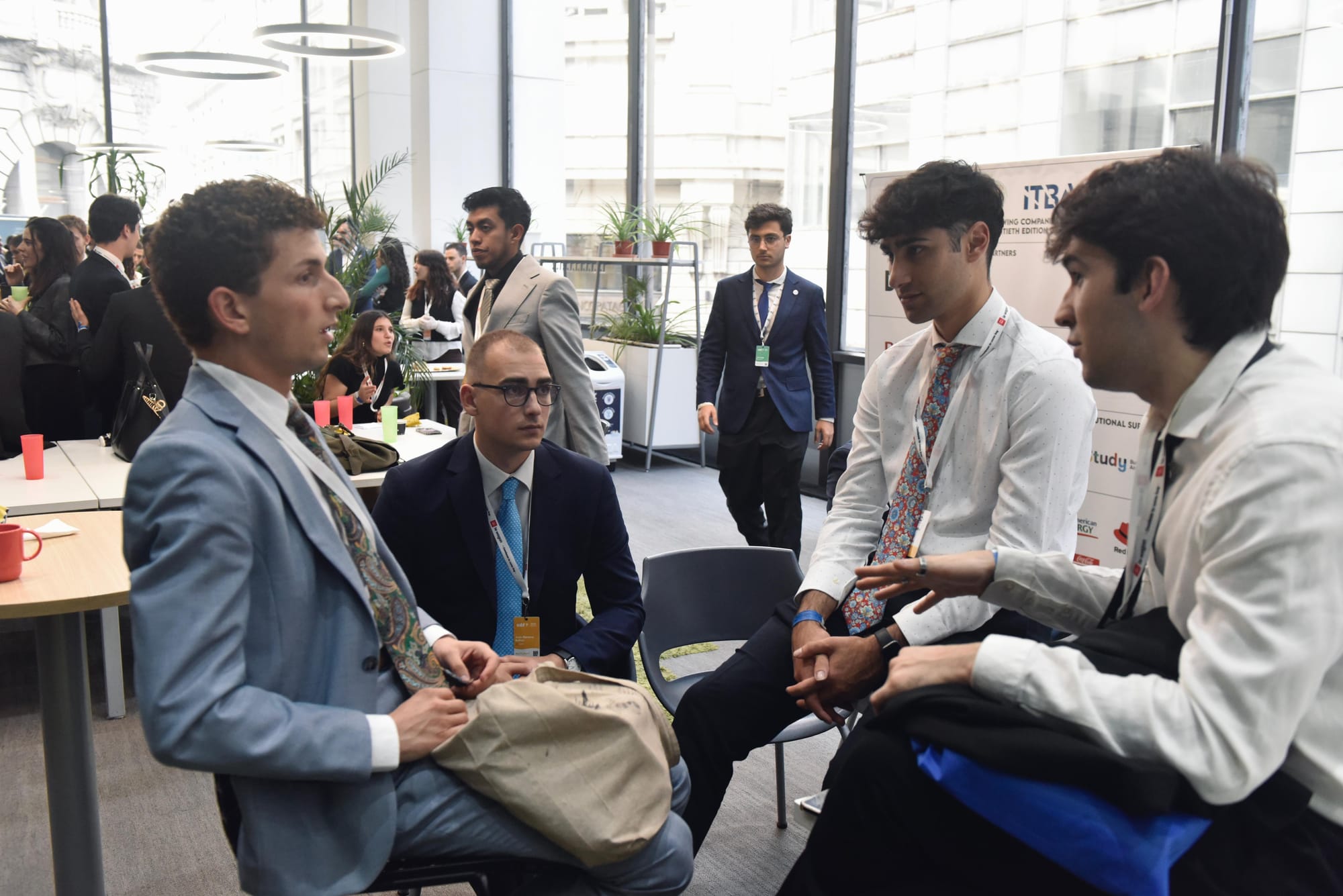
—How was your first contact with the South American Business Forum (SABF) before attending the international conference here in Buenos Aires in August 2024?
—Navarro: I found out about SABF in 2023, during my first year of my master's degree after returning from Erasmus. I remember the university sent me an email, and I thought it sounded super interesting to join, but I wasn't selected. The following year, I received another email saying, "Hey, it's time to apply for SABF again." So I sent my application, and this time I was selected.
—Chlebus: In my case, finding out about SABF was completely coincidental. I study architecture, and our school has a section called the "weekly newsletter." One day during class, I just decided to open it because I was bored and wasn't paying much attention. On the last page, there was a section on conferences, and I saw SABF. I clicked on it purely out of curiosity and liked the proposal. I read the prompt questions and signed up without telling anyone. Two months later, they told me I had been accepted to go to Buenos Aires, so of course, I had to explain to everyone what it was and why I had applied.
—During your participation, what was the spark or the thing that marked you the most about SABF, leading you to bring the idea to Spain and develop the Agora Development Summit?
—Navarro: I couldn't pinpoint one specific moment. What I do remember is that upon returning to Spain and talking to Isma, I landed back home feeling, "What an incredible event we just experienced, and what amazing people we just met." The experience of going to another country and attending a conference with people who share your ideals and drive to get things done. So, it wasn't one single thing, but a combination: coming back, having lived the experience, and then reflecting on it and saying, "We don't have anything like this here in Europe."
—Chlebus: What marked me the most was living together with the people we shared those days with, the intensity of the events, and the kindness of everyone. I clearly remember the moment we were back in Valencia; Joan and I met up for coffee, and he told me: "Hey Isma, what if we do this here in Valencia?" At first, it was hard for me to picture, but then I thought about it and said, "We have to do something like this because we don't have it here, and it's totally worth it."
—From that first contact with SABF, what path did ADS have to take to get to where it is today?
—Navarro: When we returned to Valencia in August 2024, Isma and I focused on maturing the initial idea. We called this first phase the "pre-project." Then we had a conversation with Alberto Conejero, the Vice Rector for Students at the university—with whom I have a good relationship—and I told him: "Hey Alberto, since you helped fund our trip, why don't we grab a coffee so Ismael and I can tell you where we went and why?" We presented the idea to the UPV, and the pre-project received their full support. A year later, new members joined the team, and we returned to Argentina for SABF 2025 to align with the Argentine format and confirm institutional backing. Everything pointed to the fact that we could move forward with this project. Between September and December 2025, we launched the project with a leadership team of seven UPV students who had attended SABF and could adapt it to a European framework. ADS was registered as a trademark, and the rules, guidelines, and core objectives were established. All of this was part of the "project launch" phase. Since January 2026, we have been in the "development" phase, where ADS has consolidated itself as an organization with an established team and structure.
—How is ADS structured? What are the operational areas, and what is each responsible for?
—Chlebus: We are a team of 16 people organized under a system we called "collegiate leadership." That means we have five areas, and all have an equal voice within the team. There are one or two representatives per area, and within the leadership core, we all have equal voting rights. One detail is that when we created the departments, we debated whether to name them in English or Spanish, since SABF is entirely in English. In the end, we chose Spanish because it felt more representative of us, calling them áreas.
Alliances and Communication (Alianzas y comunicación): Serves as the institutional voice of the event and directs how we want to be perceived externally.
Marketing and Talent Acquisition (Marketing y capacitación de talento): Manages social media and recruits potential attendees, participants, and students for the event.
Themes and Knowledge (Temáticas y conocimientos): Focuses on the event's activities and content—what will be discussed, who will speak, and why.
Logistics (Logística): Handles physical execution (catering, venue bookings, hotels, transportation, etc.).
Finance (Finanzas): Focuses on money management and budget allocation.
—What role do you think these spaces for discussion and debate play in today's society? Why is it important to foster critical thinking in young people?
—Chlebus: I have a clear idea about this, tied to something that really surprised me about SABF. On the second day, we did activities where we debated specific topics and had to defend a given position. While working with my team to defend a stance—whether political or related to a specific topic—other members brought up arguments that had never even crossed my mind. That happened simply because I lacked their cultural or geographical context, or their way of thinking, to arrive at those perspectives on my own. All of this made me realize how vital these spaces are—places where young people with ideas, curiosity, commitment, and drive can gather to build things. The best projects emerge from these kinds of debates. When you bring together people from different academic majors, different environments (geographically and culturally), and different social backgrounds, it adds immense value.
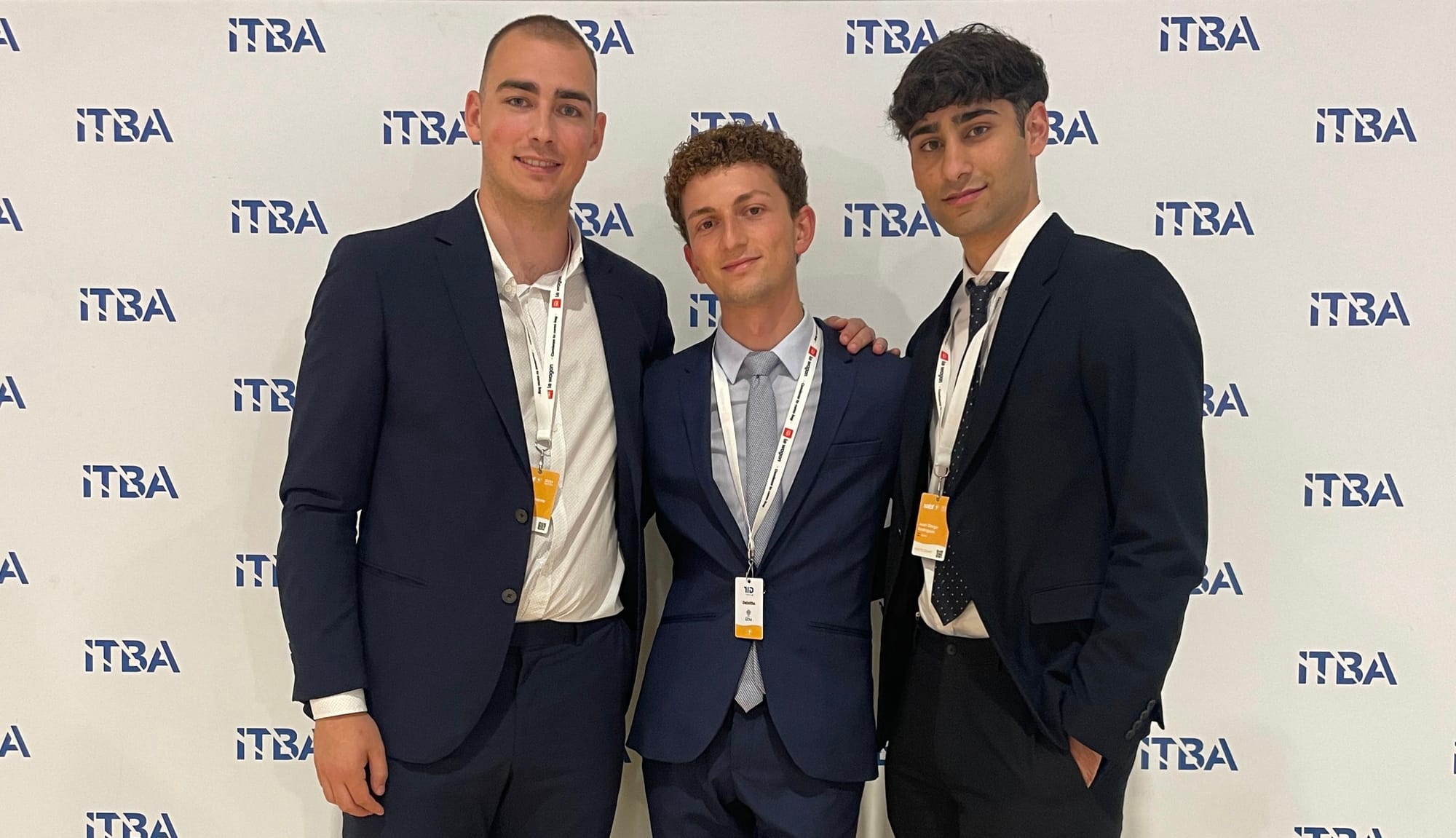
—The project's charter states: "Agora Development Summit is a must-attend event for young talent seeking to grow and solve high-impact dilemmas through deeply integrated experiences." What do you think will be the central global themes addressed at ADS in the coming years?
—Navarro: The theme we are working on this year is immediacy. One of the changes we made compared to SABF is how we handle topics. We felt that changing the main theme every year at SABF didn't allow us to dive as deep as we wanted into a specific issue. With that in mind, our focus landed directly on education—how everything around you affects your education: city infrastructure, surrounding technology, how a professor was trained, or the local economy. We don't believe we can achieve comprehensive knowledge in just one year, but our intention is precisely to develop it with more time and dedication over a multi-year cycle. On the other hand, we also consider the speakers and experts who will debate from their own experience with students—not as holders of absolute truth, but as horizontal mentors.
—Do you have an idea of what the activities will look like, or will they be defined later on?
—Chlebus: We have a draft outlining how we would like the event to run, but the specific activities aren't 100% finalized yet. We know we'll have a day dedicated to keynote speeches and workshops because we believe the most valuable learning happens when students are actively engaged the whole time. Unlike SABF, we plan to create a hybrid format with activities that blend and interact with one another. For ADS, the final day won't just be social; it will also be a day for presentations, conclusions, and closing the intellectual loop on the goals and insights gathered. Either way, everything will be fully polished and finalized by late February 2027.
—What would you like the Agora Development Summit to become in the coming years?
—Chlebus: I would love for ADS to become an organization that endures over time, successfully extending those three-year thematic cycles even further. I want us to build a repository of ideas, conclusions, and global student leaders, positioning ourselves as a benchmark in Europe. Right now, our biggest responsibility isn't just hosting the summit in February, but ensuring the organization outlasts its inaugural edition. In fact, the very existence of ADS proves that the work done at SABF works.
—Navarro: I'm an ambitious person; I recognize our limits and know there will be things during this first year that we'll want to improve. But I would love to walk back into the university ten years from now and see ADS still running. I want it to evolve, for departments not to be rigid, and for things to change if they aren't working. I believe ADS will endure, and my hope is that it leaves a lasting legacy over time.
—When do applications open? Who can participate in the summit? Where can we find ADS on social media?
—Chlebus: Applications will open between October and November, giving people time to learn about the forum, allowing universities to spread the word, and giving us time to evaluate applications. As for requirements, the main condition is to be a student: fit within the age limit, have ambition, and bring enthusiasm. Furthermore, it is completely free for any university student in the world. For more information—while we are still finishing our website—you can find us on Instagram at @adsvalencia and on LinkedIn as Agora Development Summit.
Josefina Girotti - @mjosefina.girotti